What your trade computes that others do not
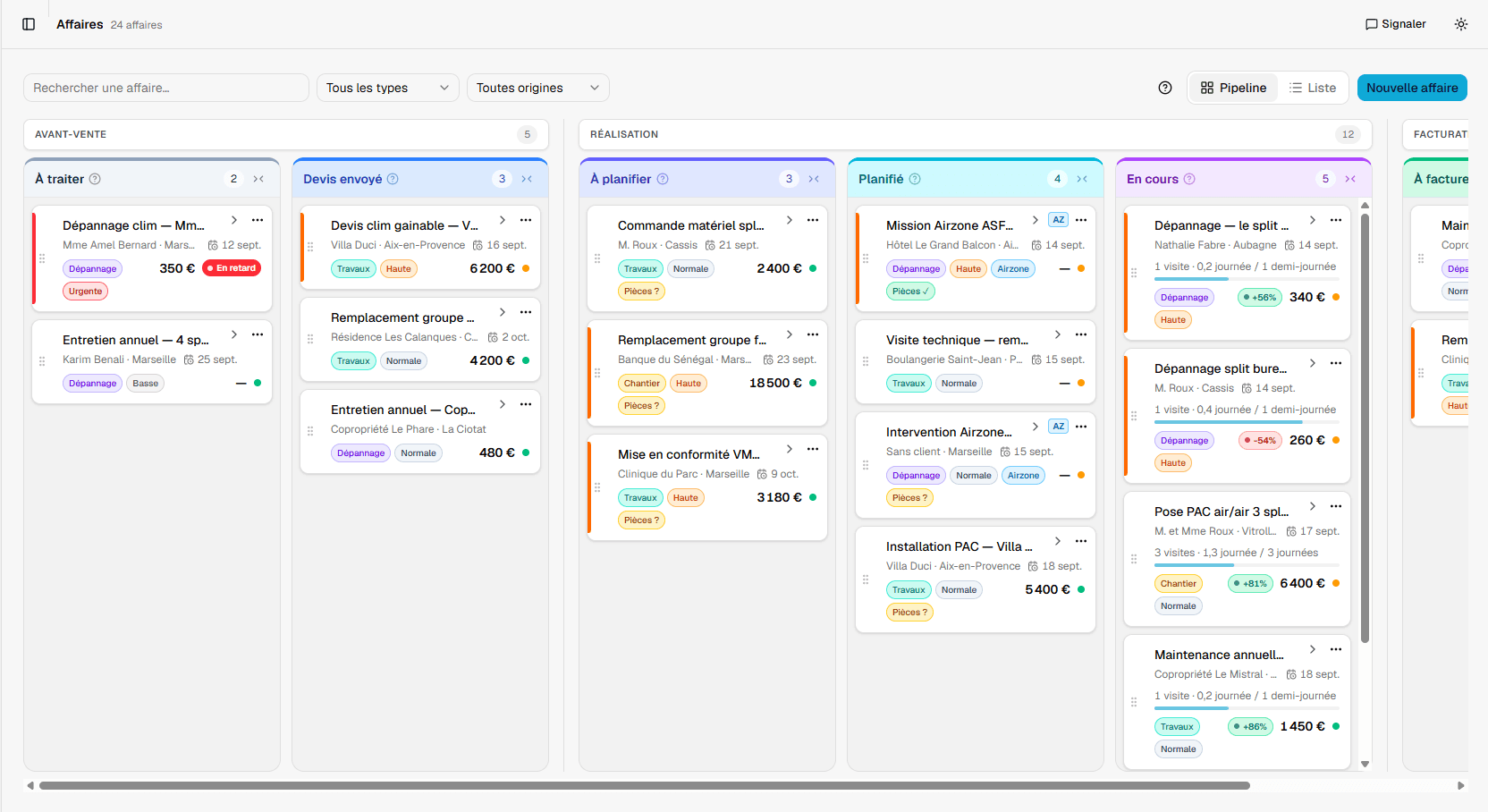
The volume is the inverse of heavy construction: where a builder follows fifteen sites a year, an installer handles several a week. A quote must therefore be produced in minutes from pre-priced work items, and response time counts as much as price: a homeowner kept waiting three days has already called someone else. A tool that needs ten minutes per quote is not slow, it is unusable.
Margin then comes from two sources that behave differently. Labour is steered by hours, materials by purchase prices, which move, which depend on negotiated discounts and which differ by whichever supplier was used that day. A uniform mark-up loses money on the lines where the price rose, with nobody noticing until the next year-end.
Two more mechanisms are specific to the trade. Warranty callbacks first: a return is not a new job, it is a cost that must attach to the original works, or an installation that went wrong keeps looking profitable. Then renovation-grant files, whose approval gates payment for part of the works: they carry their own documents, delays and cash-flow risk, and they are rarely tracked in the same place as the works themselves.
What most firms work around by hand
The business runs, but it runs on two or three people's memory.
- Quotes are rebuilt from an old quote found in the files.
- The call-out schedule is a whiteboard, rewritten every morning.
- Supplier delivery notes are matched to a job from memory, or not at all.
- A warranty callback is handled as a brand-new job.
- Grant files are tracked in a spreadsheet, separately from the works.
- A finished job's real margin is never recomputed.
Does your system live in a spreadsheet? Take the ten-sign test
What we have not done here yet
No engagement in the portfolio covers this sector. We would rather write that than let it be assumed. Here is the closest one by its management rules:
HVACJobs and field reports for an HVAC installerA single tool to track jobs, schedule interventions and produce field reports, replacing a general-purpose task manager pushed well past its purpose.Read the full case study