What your trade computes that others do not
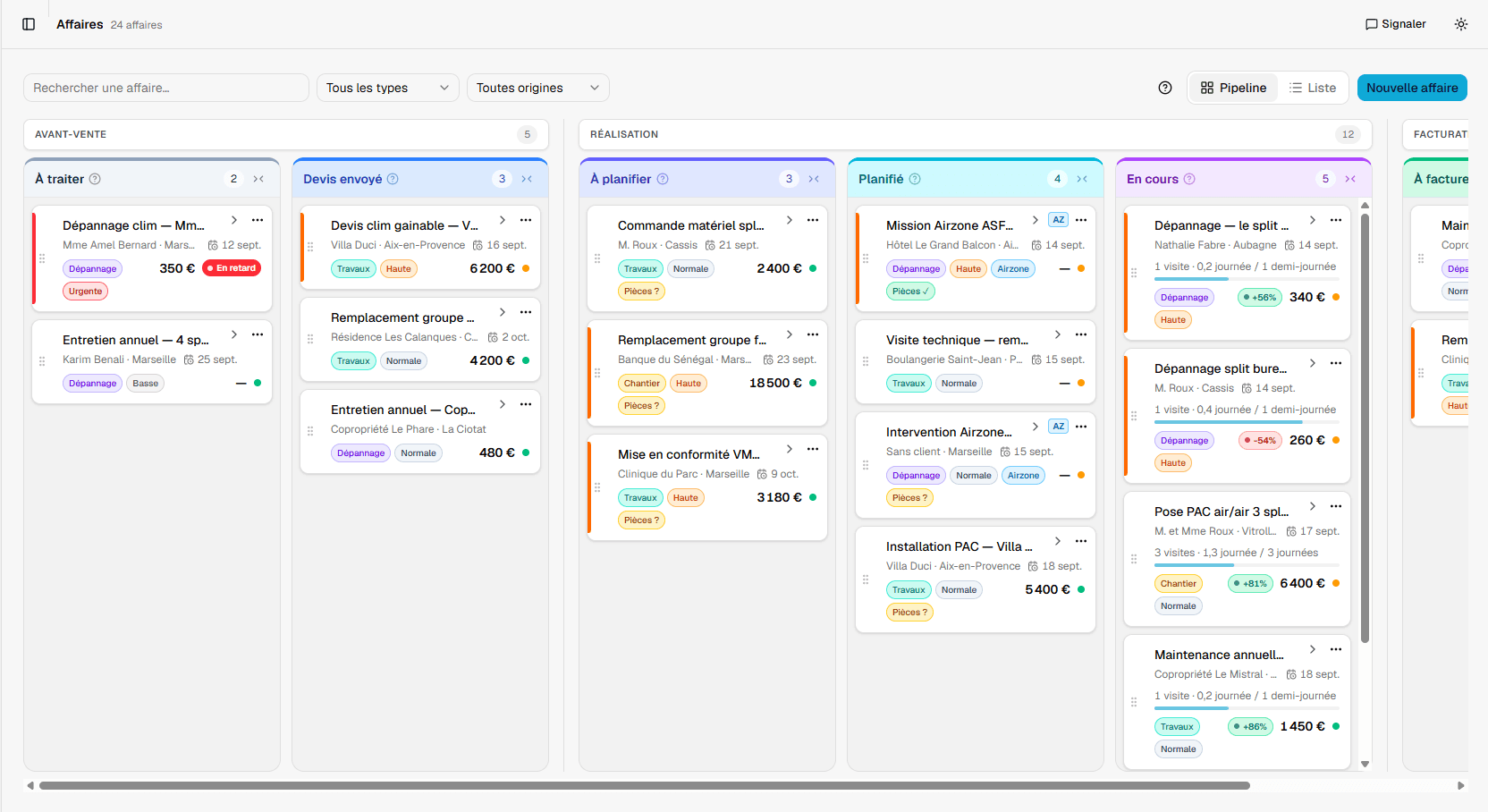
A maintenance contract is an annual fee backed by a number of visits, and its profitability only reads at the end of the season. A site mown twelve times instead of eight because growth was strong is still billed the same: a contract losing money does not announce itself, you have to go and find it. Comparing time actually spent against the fee, site by site, is the only way to know which contracts to renegotiate before they roll over.
The operating unit is then neither the project nor the client, but the round. A crew leaves with a vehicle, equipment and a list of sites, and its output depends as much on travel as on work. Grouping geographically, accounting for the kit on board, knowing what was done at each site: that is where hours are won, and it is the point generic tools miss entirely because they think in appointments.
Finally, the season governs everything. Activity concentrates into a few months, construction and maintenance compete for the same crews, and bad weather shifts a whole week. A firm that knows in March how many maintenance hours are already committed for the year can decide which construction projects to accept; a firm that does not accepts everything and subcontracts in a panic at the worst moment.
What most firms work around by hand
The business is steered on the owner's experience, which works until the third crew.
- Rounds are organised the previous evening, from memory.
- Visits completed under a contract are counted after the fact, if at all.
- Time spent per site is unknown; only the day's total is.
- Construction projects and maintenance are mixed into the same revenue figure.
- Equipment assigned to a crew is tracked on a board in the yard.
- Contracts roll over without knowing which ones lose money.
Does your system live in a spreadsheet? Take the ten-sign test
What we have not done here yet
No engagement in the portfolio covers this sector. We would rather write that than let it be assumed. Here is the closest one by its management rules:
HVACJobs and field reports for an HVAC installerA single tool to track jobs, schedule interventions and produce field reports, replacing a general-purpose task manager pushed well past its purpose.Read the full case study